Historical Background: Fashion After World War I
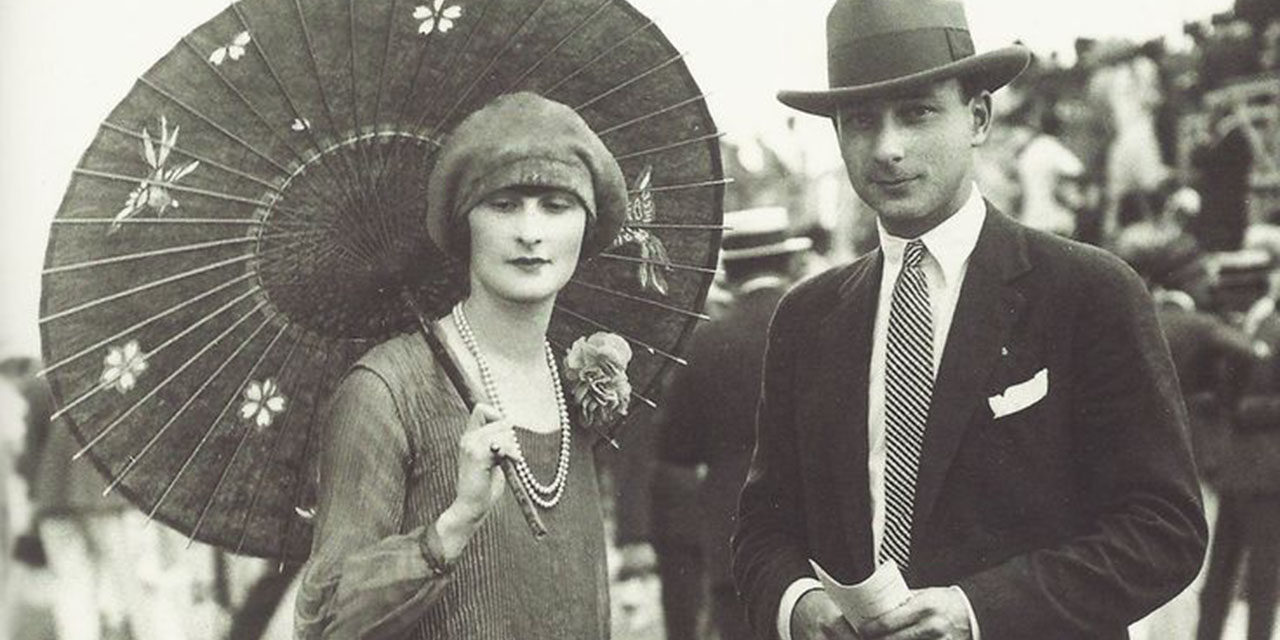
The 1920s marked a radical transformation in fashion, driven by deep social, political, and cultural changes after World War I. Society rejected the rigid traditions of the past and embraced modernity, speed, and freedom. Fashion became a visual symbol of this shift.
Women gained new social roles: they worked, earned money, voted, and participated actively in public life. As a result, clothing had to reflect mobility, independence, and comfort rather than restriction and decoration
The Concept of the “New Woman”
The “New Woman” became the central figure of 1920s fashion. She was confident, independent, educated, and socially active. Her appearance challenged traditional femininity and rejected the ideal of fragility.
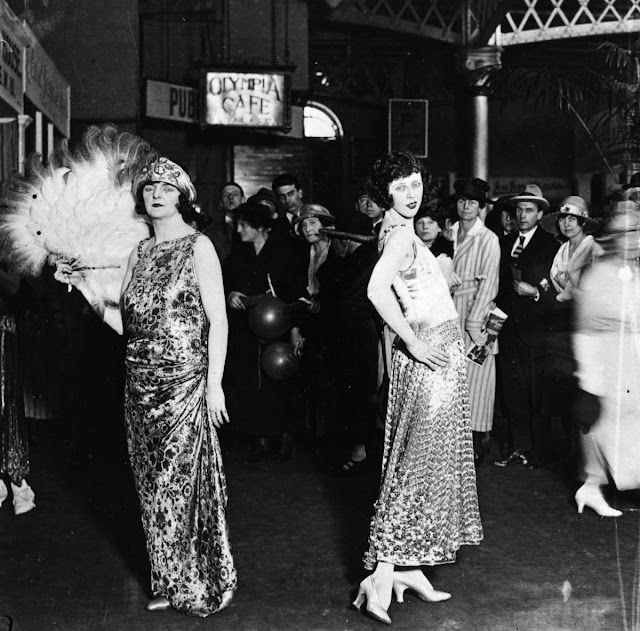
Fashion no longer emphasized curves or the waist. Instead, it promoted a straight, youthful silhouette that symbolized equality with men and freedom from physical constraints.
Flapper Style: Definition and Meaning
Flapper — a young woman of the 1920s who challenged traditional social norms through fashion, behavior, and lifestyle.
Flappers became the most iconic figures of the decade. Their fashion symbolized rebellion against conservative values. They danced jazz, smoked in public, cut their hair short, and wore daring clothing.
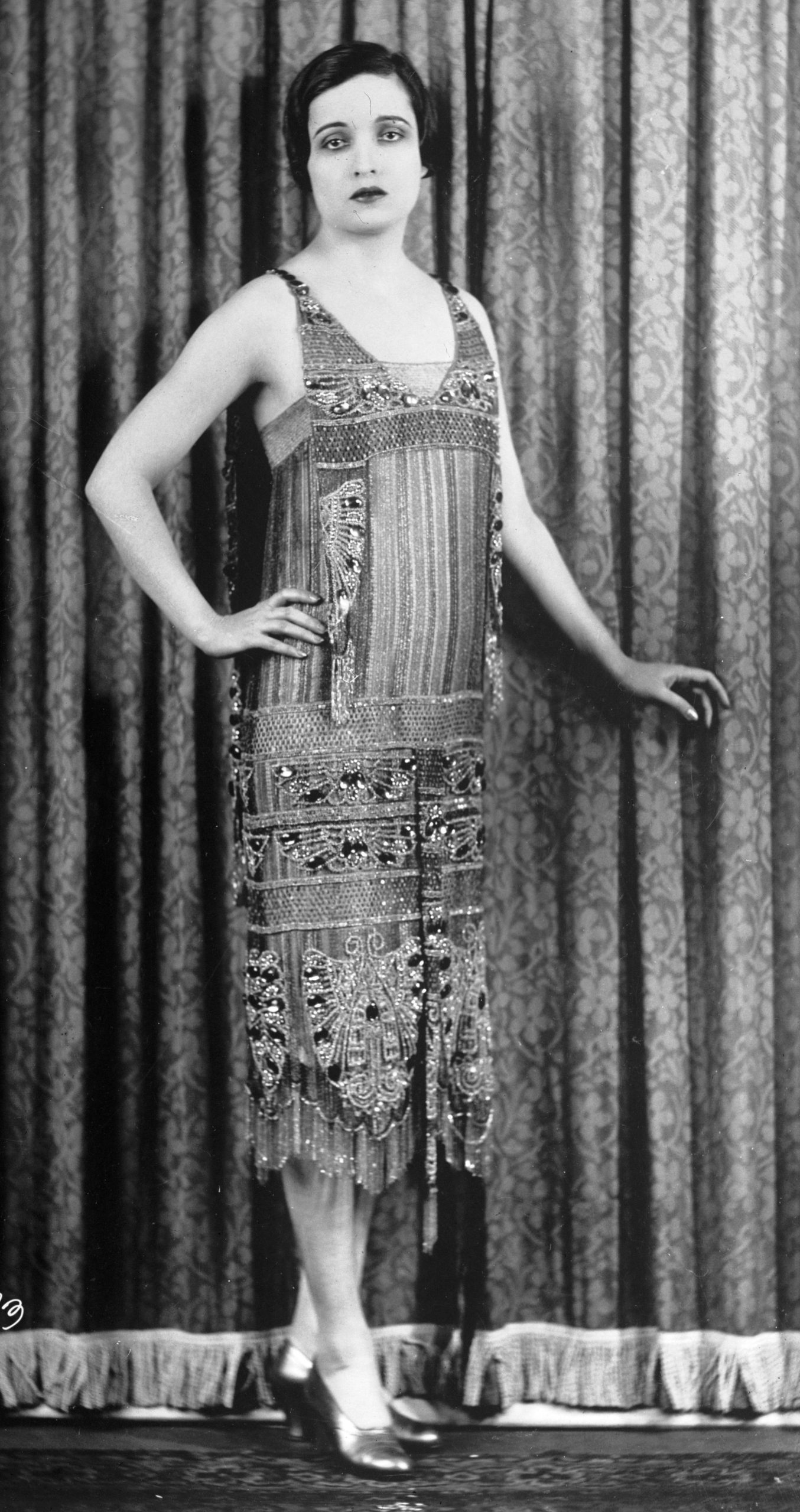
Typical flapper dresses were loose, sleeveless, and often decorated with fringe, beads, or sequins. These elements created movement and visual rhythm, especially while dancing.
Key Fashion Terms of the 1920s
Lightweight fabrics such as silk, chiffon, and satin dominated women’s fashion. Dresses were richly decorated with hand-sewn beads, sequins, embroidery, and fringe.
Despite the simple construction, craftsmanship remained extremely detailed. Evening dresses often required hundreds of hours of manual work.
Drop Waist
Definition: A dress silhouette where the waistline is placed below the natural waist, usually at the hips.
Meaning: Created a straight, youthful shape and rejected traditional femininity.
Shift Dress
Definition: A loose, straight dress without waist shaping.
Meaning: Allowed freedom of movement and comfort.
Cloche Hat
Definition: A close-fitting, bell-shaped hat worn low on the forehead.
Meaning: Highlighted short hairstyles and became a symbol of modern femininity.
Men’s Fashion in the 1920s
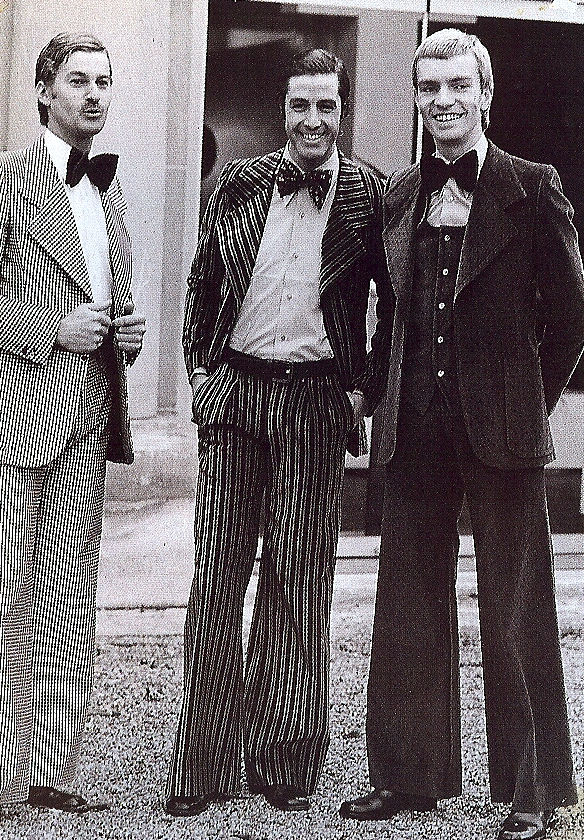
Men’s fashion remained elegant but became less rigid. Suits featured softer shoulders, wider trousers, and lighter fabrics. Sportswear and casual styles gained popularity, reflecting a more relaxed lifestyle.
Hairstyles and Makeup: A New Beauty Ideal
Short hair became a powerful statement. The bob haircut represented freedom, rebellion, and a break with Victorian femininity. Makeup became darker and more dramatic, emphasizing eyes and lips.
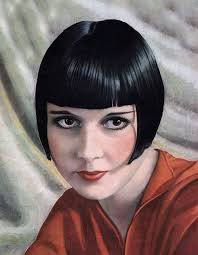
Bob Cut — a short haircut, usually chin-length, symbolizing independence and modernity
Cultural Influence: Jazz, Cinema, and Mass Media
Jazz music, cinema, and mass media shaped fashion trends. Hollywood actresses became global fashion icons, and fashion spread faster than ever before.
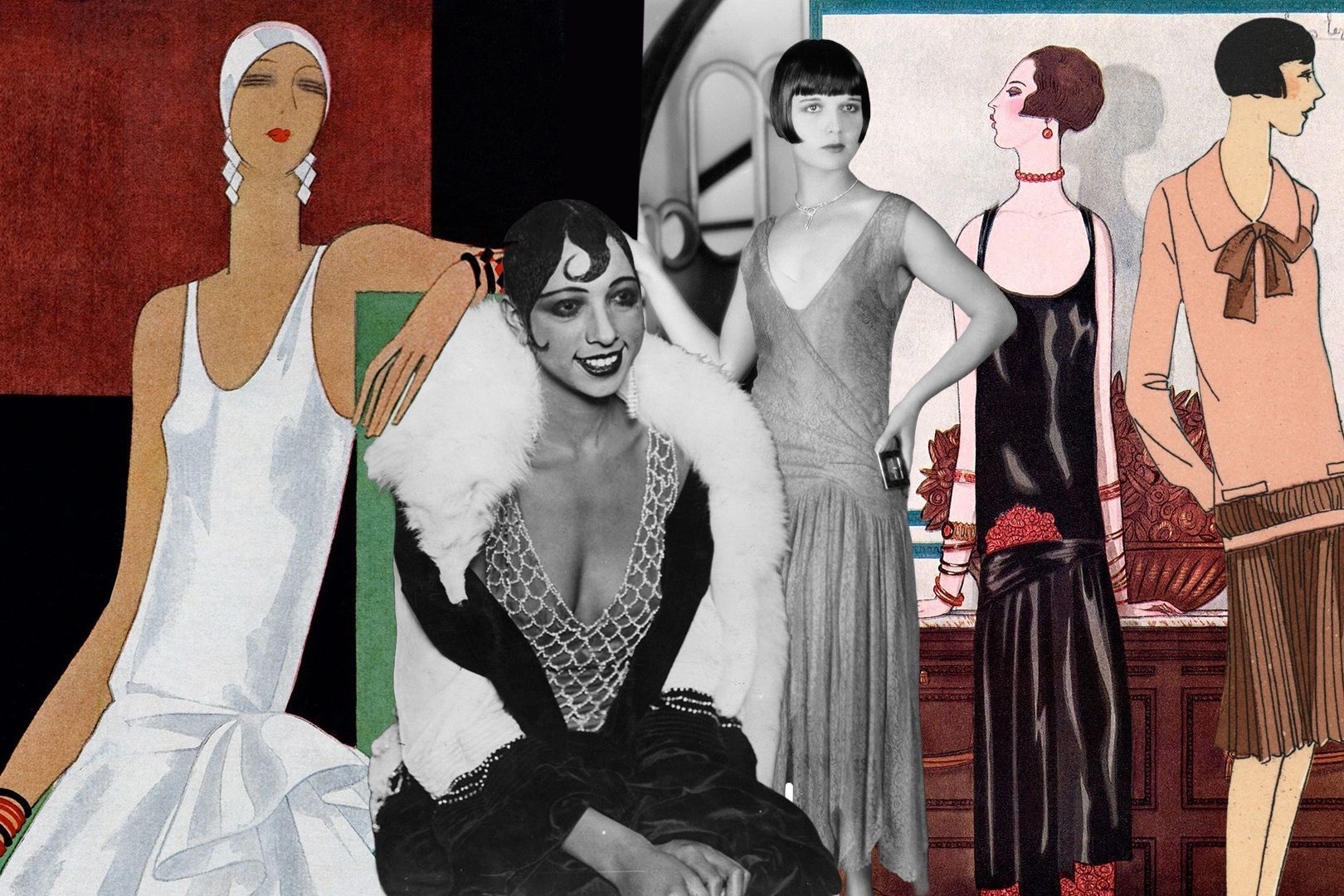
The 1920s permanently changed fashion by introducing freedom, comfort, and individuality. Many modern silhouettes, beauty standards, and lifestyle-based fashion concepts began in this decade.