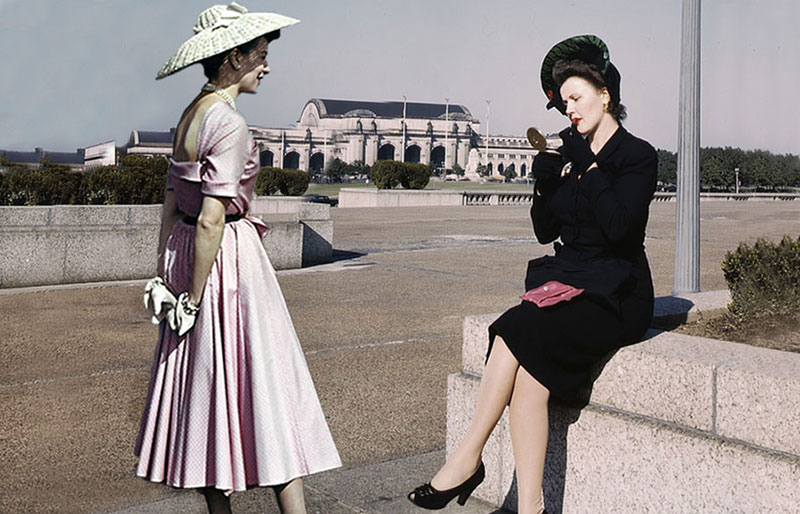
Introduction: An Era Defined by History and Style
The 1940s was a decade shaped by the profound impact of World War II and the dramatic social changes that followed. Fashion in this period reflected not only aesthetic tastes but also the realities of daily life, economics, and cultural shifts. The result was a style evolution from practical, wartime clothing to a celebration of femininity and new silhouettes by the end of the decade.
1. Early 1940s Fashion: Utility and Practicality
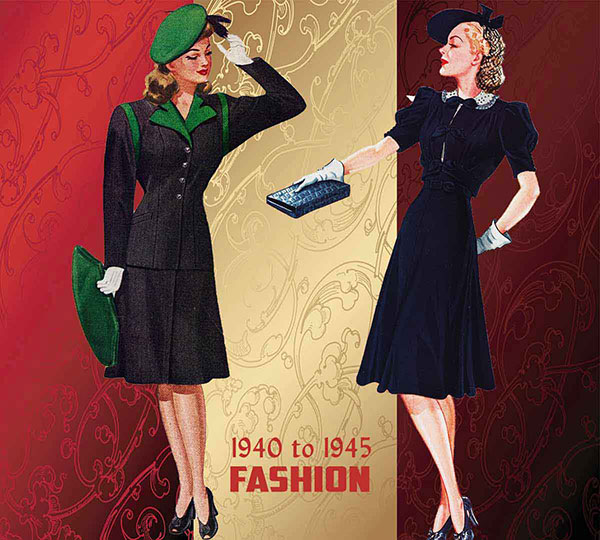
In the early 1940s, wartime restrictions on textiles and manufacturing had a huge effect on fashion. Governments rationed fabrics, and designers had to work within strict limitations. As a result, clothing became simpler, more functional, and longer-lasting.
This era’s fashion featured:
- Utility clothing, designed to use as little fabric as possible while remaining serviceable and stylish.
- Tailored suits and dresses with minimal decoration, often made from wool or cotton blends.
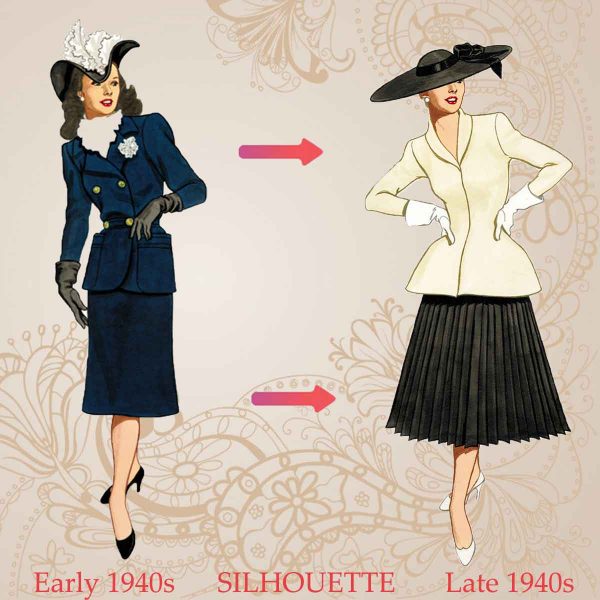
- Shoulder emphasis and nipped waistlines, inspired by military uniforms, but adapted into civilian wear.
- The Kitty Foyle dress — a practical shirtwaist style with contrasting collars and cuffs — became widely popular for its flattering simplicity.
During the war, women entering industrial work and other new roles required clothing that was both functional and respectable. Pants and tailored separables became practical alternatives to skirts, reflecting broader cultural change.
2. Key Fashion Items and Trends of the Early 1940s
The early parts of the decade emphasized utility, but within that framework, specific styles emerged:
- Shirtwaist dresses: Tailored with defined waists and often belted.
- Coats and jackets: Simple lines, practical cuts, sometimes with padded shoulders.
- Stockings and accessories: Nylon stockings were coveted until diverted to military production.
- Hats and gloves: Even during wartime, well-matched accessories gave outfits a finished look.
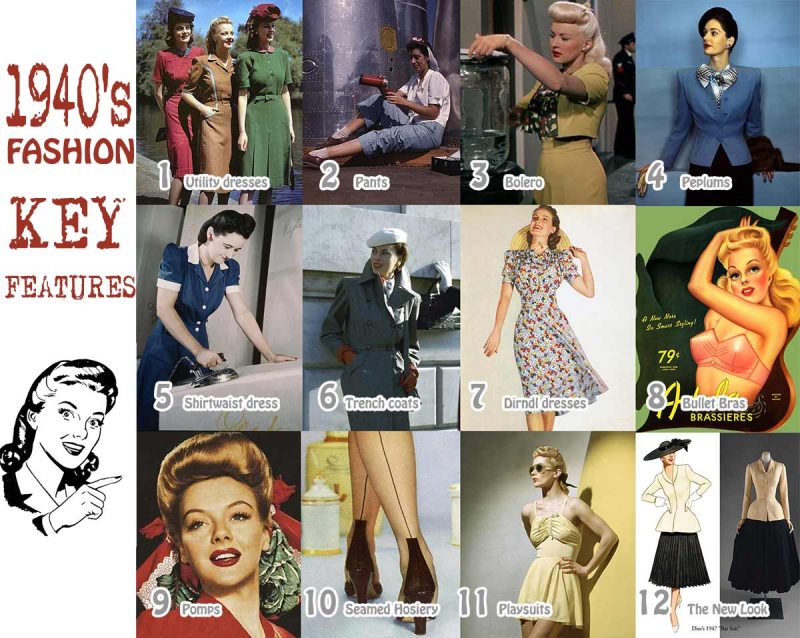
Despite austerity, fashion was not devoid of creativity. Tailored garments often used clever cuts and proportions to remain flattering even with limited resources.
3. Hairstyles and Beauty in the 1940s
Fashion was not only about clothing. Hairstyles played a significant role in 1940s style. Victory rolls — large curls rolled above the ears or on top of the head — became an iconic hairstyle of the era, symbolizing resilience and optimism amid wartime challenges.
Makeup was generally more restrained due to shortages, emphasizing natural beauty with simple techniques. However, classic red lipstick often remained a signature look for women.
4. Late 1940s: The Post-War “New Look”
With the end of World War II, fashion underwent a rapid transformation. In 1947, French designer Christian Dior introduced the “New Look,” a style that celebrated luxury, glamour, and the feminine silhouette after years of utilitarian constraints.
This groundbreaking look featured:
- Highly cinched waists
- Fuller, longer skirts
- Luxurious fabrics and emphasis on curves
Dior’s creations marked a dramatic departure from wartime austerity and helped reestablish Paris as the center of haute couture.
5. Cultural Influences on 1940s Fashion
Cinema and celebrities influenced fashion trends deeply. Actresses like Katharine Hepburn popularized trousers and more athletic, tailored looks, while movie star glamour continued to shape eveningwear.
At the same time, American and British designers developed styles that responded to local needs and tastes, weaving together practical wear with emerging individuality.
Conclusion: The Legacy of 1940s Fashion
The 1940s were a decade of transformation. From the utility styles shaped by global conflict to the elegant lines of the New Look, this period demonstrated how fashion responds to both necessity and creativity. The silhouette shifts, cultural influences, and innovations in clothing and beauty continue to inspire designers and enthusiasts today.